
.png)





There's a particular kind of unease that creeps in mid-manicure when you notice something off – a file that looks a little too used, a tub that wasn't quite rinsed, a technician who skipped washing their hands before starting. You don't want to make it awkward, so you usually just... let it go. But that instinct you had? It was right to notice.
Nail salon safety isn't really about being paranoid or high-maintenance. It's about understanding that a manicure involves tools that touch your skin, cuticles that get trimmed or filed, and sometimes tiny breaks in the skin barrier – all of which means hygiene isn't a nice-to-have, it's the actual foundation of the service. Knowing what a properly run, safety-conscious salon looks like puts you in a much better position to enjoy your appointment instead of quietly worrying through it.
So let's go through what real salon safety actually involves, what's required by law here in Illinois, the questions worth asking before you book, and the red flags that should send you elsewhere.
Why This Matters More Than People Realize
Nail services involve a level of physical contact that a lot of other beauty treatments don't. Cuticle work, in particular, can create micro-abrasions in the skin – tiny, often invisible breaks that are more than enough for bacteria, fungi, or viruses to enter if a tool wasn't properly disinfected. This is how infections like paronychia (a painful infection around the nail), fungal nail infections, and in rare but real cases, more serious bloodborne illnesses get transmitted in salon settings.
None of this is meant to scare you off manicures – it's meant to explain why "the salon looked nice" isn't actually the full picture of whether it's safe. A gorgeous interior can still have a technician reusing a file between clients. The two things aren't related, which is exactly why it's worth knowing what to actually check for.
What Illinois Actually Requires (And Why It Matters)
Something that surprises a lot of people: nail salon sanitation in Illinois isn't just a matter of a salon's personal standards – it's state law, enforced by the Illinois Department of Financial and Professional Regulation (IDFPR). A few of the specific requirements built into the state's administrative code are worth knowing, because they give you a real baseline for what "properly run" actually means:
- Every technician must hold an Illinois Licensed Nail Technician credential, which requires 350 hours of state-approved training – including dedicated coursework in sanitation, infection control, bacteriology, and OSHA standards – plus a passing score on a state licensing exam.
- All non-disposable tools that touch a client must be cleaned and disinfected with a hospital-grade EPA-registered disinfectant after every single use – not "cleaned when it looks dirty," but every time, every client.
- Single-use items – files, buffers, pumice stones, orangewood sticks, and similar porous or disposable tools – are legally required to be disposed of after one use, not sanitized and reused.
- Products containing MMA (methyl methacrylate), an older acrylic monomer linked to nail damage and allergic reactions, are banned outright in Illinois nail services.
- Pedicure basins and foot spas have a specific, mandated cleaning and disinfecting protocol between every single client, following standards set by the International Nail Technicians Association.
The point of laying this out isn't to turn your next manicure into a legal audit. It's that these aren't arbitrary "nice salon" standards – they're the actual legal floor every licensed salon in Illinois is supposed to meet. Knowing that gives you a real basis for comparison when you're evaluating a place, rather than just going on vibes.
What a Genuinely Clean, Safe Salon Actually Looks Like
Beyond the legal minimums, here's what to actually pay attention to when you walk in.
How tools are stored and sterilized. Metal implements – cuticle nippers, pushers, and similar tools – should come to you either freshly sterilized in a sealed pouch or pulled from a properly maintained disinfectant solution or UV sterilization cabinet. If a technician pulls a tool straight from a drawer with no visible sterilization process, that's worth asking about.
Whether single-use items are actually single-use. Nail files, buffers, and pumice stones are inexpensive precisely because they're meant to be replaced constantly. A salon that's reusing porous files across multiple clients is cutting a corner that directly affects your safety – porous materials can't be fully disinfected the way metal tools can.
The overall workstation. A clean station doesn't mean fancy – it means free of old nail clippings, dust, and product residue between clients, with a visibly organized setup rather than clutter accumulating throughout the day.
Ventilation. This one's easy to underestimate, but proper airflow matters – especially in a space using gel, hard gel, or acrylic products, since chemical fumes from monomers and primers can build up in poorly ventilated rooms. If a strong chemical smell hits you the moment you walk in, that's often a ventilation issue as much as a product one.
Technician hygiene and behavior. Hands should be washed or sanitized before your service starts – this is actually required by Illinois code – and gloves should be worn during pedicures in particular, given the closer contact with feet and any potential skin issues.
Questions You're Completely Allowed to Ask
A good salon won't flinch at any of these. If a technician gets visibly irritated or evasive when you ask, that reaction alone tells you something.
"How do you sterilize your metal tools?" You're listening for a real answer – hospital-grade disinfectant, autoclave, or a comparable sterilization process – not a vague "oh, we clean everything."
"Are your files and buffers single-use?" This should be an easy, confident yes.
"How do you clean the pedicure tub between clients?" Look for a specific answer involving disinfectant or a liner system, not a shrug.
"What products are you using on me today?" A salon using recognizable, quality-controlled product lines is generally a good sign – it means less risk of unlabeled or improperly stored chemicals, and lower odds of an allergic reaction from questionable ingredients.
Red Flags Worth Taking Seriously
A few signs are worth walking away over, not just noting quietly:
- Tools going straight from one client to the next with no visible cleaning step in between.
- Unlabeled bottles or products with no clear brand or ingredient information.
- Visibly dirty floors, bathrooms, or storage areas – general facility cleanliness tends to correlate with cleanliness in the parts you can't see, like tool sterilization.
- No visible license or certification displayed for technicians or the salon itself.
- Cuts, nicks, or burns during service. A skilled, properly trained technician using correct technique shouldn't be regularly nicking clients – this is often a sign of rushed, careless, or under-trained work, and it also directly increases infection risk since it creates an open wound in an environment with lots of shared tools and surfaces.
Where the Russian Manicure Technique Fits Into This Conversation
This is actually worth addressing directly, because it comes up a lot: Russian manicures and e-file techniques involve tools that get closer to the cuticle than a traditional manicure does, and some people assume that automatically means higher risk. The truth is closer to the opposite – when done correctly, by a properly trained technician, with correctly sterilized bits and tools, e-file technique is precise and controlled in a way that traditional cutting isn't, which actually reduces the risk of nicks and over-cutting compared to a rushed manual cuticle trim.
The key phrase there is "when done correctly." E-file work is a skill that takes real training to do safely – this is exactly why the technician's experience and the salon's tool sterilization standards matter so much more with this technique than with a basic polish change. It's less about the tool itself and more about who's holding it, and how well the equipment behind them is maintained.
How We Approach This at Flamant
Safety isn't something we treat as separate from the experience we're trying to give clients – it's the foundation the whole experience is built on. Every tool that touches your hands or feet is properly sterilized between clients, following hospital-grade disinfecting standards, with single-use items like files and buffers genuinely used once and discarded rather than recycled between appointments.
Our technicians are licensed through the state of Illinois and trained continuously – not just at the point of hire, but on an ongoing basis in the specific techniques we specialize in, particularly Russian dry manicure and e-file work, precisely because that level of precision only stays safe when it's paired with real, current training. We use premium, properly labeled product lines, including La Sultane de Saba, rather than unlabeled or bulk-sourced alternatives, which matters both for your skin and nail health and for consistent, predictable results.
If you're someone who prefers a quieter, more controlled environment altogether, our private rooms at the Wilmette location offer exactly that – a more personal setting where you can ask questions, relax, and see firsthand how your service is being handled, without the noise and traffic of a larger open floor.
A Safe Manicure Should Never Feel Like a Gamble
At the end of the day, a nail appointment should be something you look forward to, not something you quietly worry through. Knowing what proper sanitation actually looks like, understanding what Illinois legally requires, and feeling comfortable asking direct questions puts you in control of that experience – and any salon confident in its own standards should welcome those questions rather than dodge them.
If you'd like to see our approach firsthand, we'd genuinely love to have you in. Book your appointment at our Lincoln Park or Wilmette studio, ask us anything you want about our process along the way, and let's give your hands and feet the safe, careful, unhurried care they deserve.
Recommended
Articles
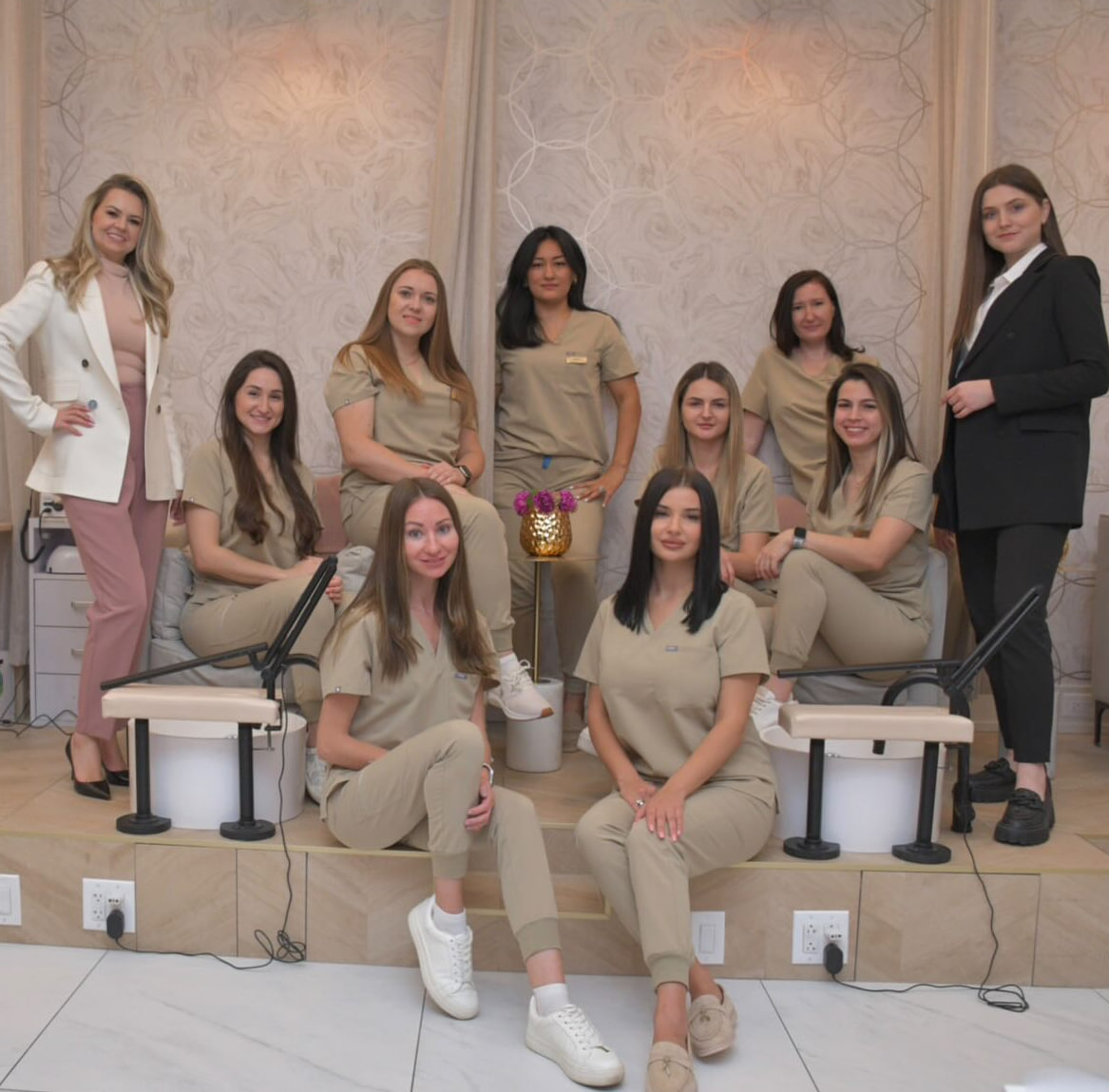
Meet the Flamant Nail Boutique Team: The Nail Technicians Behind the Salon

Nail Salon Gift Cards in Chicago: The Self-Care Gift That Always Fits