
.png)


Japanese Manicure Chicago: The Natural Nail Treatment You Didn't Know You Needed
A Japanese manicure Chicago appointment looks almost unfinished if you are used to leaving the salon with gel, color and perfectly reflective topcoat.
There is no polish.
No French tip. No chrome. No lamp.
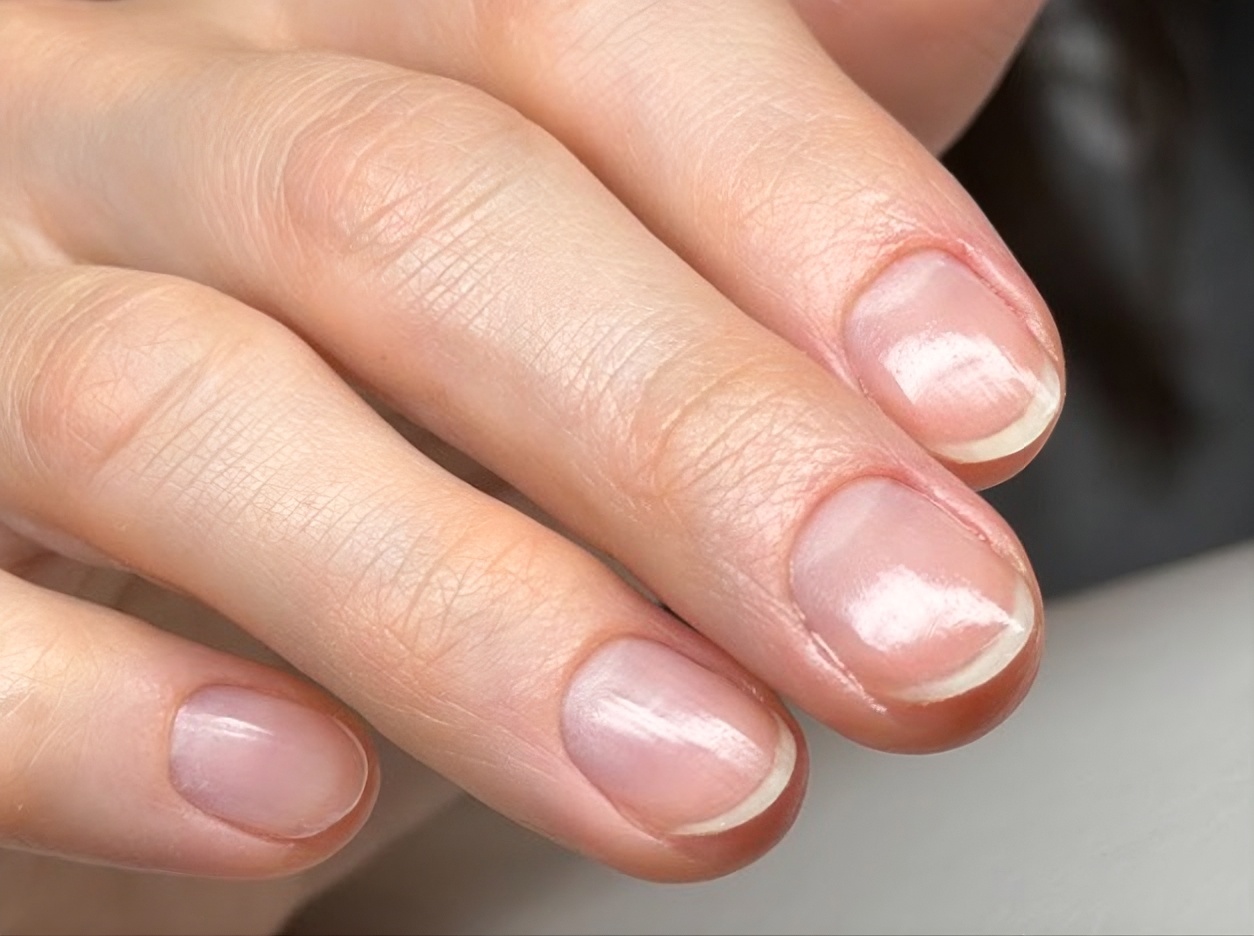
And yet the nails at the end look unusually polished — smooth, neat, softly pink and shiny enough that you may have to look twice to check whether anything was actually applied on top.
That is the point.
A Japanese manicure works with the natural nail rather than covering it. The nail is shaped, the surrounding skin is cared for, and special pastes and polishing products are worked across the surface. What you leave with is still completely your own nail, just considerably more groomed.
For people who have spent years automatically choosing gel at every appointment, it can feel surprisingly different.
Almost strange at first.
Then you see the shine.
What exactly is a Japanese manicure?
A Japanese manicure is a natural nail service with no colored polish and no gel coating.
Instead of building something over the nail, the treatment focuses on the natural surface itself.
Special mineral-based cosmetic pastes are worked over the nail and followed by careful buffing. The process smooths the appearance of the surface and creates the recognizable polished shine associated with the treatment.
It is sometimes called a P.Shine manicure Chicago clients may see mentioned online, after one of the best-known systems used for this type of service.
Visually, the result is very specific.
The nail does not look painted.
It looks healthy.
The free edge remains its natural ivory-white. The main nail plate looks slightly pinker because there is nothing opaque covering it. The surface catches the light, but not with the glassy thickness you might associate with gel topcoat.
It is a softer shine.
Put your hand near a window and it becomes more obvious.
That natural finish is a big part of why people try Japanese manicures in the first place. Some are tired of choosing colors. Others are growing out previous enhancements or simply want a few weeks where their hands look finished without looking "done."
There is nothing to coordinate with your clothes.
Nothing to get bored with after ten days.
Your nails still look like your nails.
Just on a particularly good day.
How is it different from gel manicure or hard gel?
The easiest way to understand the difference is this:
A gel manicure adds a coating.
A Japanese manicure does not.
With gel polish, product is applied over the nail and cured under a lamp. Hard gel goes further by adding structure and, when needed, additional strength or length.
Both create a layer over the natural nail.
A Japanese manicure takes the opposite approach.
There is no gel layer to cure. No colored coating. No topcoat that later needs to be filed or soaked away. Once the service is finished, you can see and touch the natural nail itself.
That makes it a very different type of appointment.
If you normally choose hard gel because you want added structure, length or substantial protection, a Japanese manicure is not a substitute for that.
It does not make your natural nail behave like an enhancement.
A thin natural nail is still a natural nail afterward.
That distinction matters.
What the treatment can do is make the surface look smoother, more polished and more cared for while keeping everything completely natural.
For some clients, that is exactly what they are looking for.
A break from coatings can feel refreshing
People sometimes talk about letting nails "breathe," but nails do not breathe in the way skin does.
Still, wanting time without a coating is completely reasonable.
Maybe you have worn gel continuously for months and want to see your natural nails again.
Maybe you are ready to shorten everything and start fresh.
Or perhaps you simply do not want another removal cycle right now.
A no polish manicure Chicago option gives you that reset without leaving the nails looking ignored.
They are still shaped.
The cuticles are still cleaned up.
The surface still has a finish.
You just skip the color and coating.
For someone accustomed to gel, the first reaction can be, "That's it?"
Then the hands come together and you see all ten nails at once.
Clean, glossy, understated.
Yes. That's it.
And that simplicity is why the treatment works.
The treatment step by step
There is nothing particularly intimidating about a Japanese manicure appointment.
Actually, it is quite relaxing to watch.
Instead of layers of color being painted and cured one after another, most of the transformation happens through preparation, product application and polishing.
Nail prep and shaping
The service starts with the natural nail.
Length and shape are adjusted first so everything looks intentional before any polishing begins.
This can be very subtle.
If your nails are already short, they may simply be evened out. A softly rounded or squoval shape often suits this type of manicure because it follows the natural proportions of the fingertip.
Longer natural nails can be shaped too.
There is no rule that a natural manicure means extremely short nails.
Cuticle care follows, cleaning the nail area and creating that crisp outline around the base that makes even a completely bare manicure look finished.
This part does more visually than people expect.
Before color ever enters the conversation, neat cuticles and ten evenly shaped nails already change the appearance of the hand.
Sometimes that is enough to make someone reconsider the polish entirely.
The mineral paste application
Next comes the part that makes a Japanese manicure different.
A specialized cosmetic paste is worked across the natural nail.
Depending on the system used, these types of products may contain combinations of minerals, waxes and conditioning ingredients. Rather than being painted on and left as a visible coating, the product is buffed across the nail surface.
The motion is controlled and repetitive.
Little by little, the surface begins looking smoother.
This is often described as "nourishing" the nail, although it is better to understand that word in a cosmetic sense. The visible nail plate is made of keratinized cells and cannot be repaired from the inside by a manicure paste.
What the treatment can do is condition and refine its surface.
That distinction does not make the result less noticeable.
If anything, it makes the service easier to understand.
You are improving what is already there rather than hiding it underneath another product.
Buffing to a natural shine
This is where the manicure suddenly makes sense.
The nail is polished with a specialized buffing tool until the surface begins reflecting light.
No clear polish is painted over it.
That usually surprises first-time clients.
The shine comes from the treatment and polishing process itself.
At first it may look like a mild satin finish. A little more polishing and the reflection becomes stronger, especially down the center of the nail where light naturally catches.
The result is not quite the same as a gel topcoat.
Gel can look almost glass-covered.
A Japanese manicure has a thinner, more natural sheen because there is no visible layer sitting above the nail.
You can still see every natural feature underneath.
That includes some imperfections.
And that is okay.
The treatment is supposed to refine the natural nail, not turn it into something artificial.
Finishing with nourishing oil
The final step brings the attention back to the surrounding skin.
Cuticle oil is applied around the nail and massaged in.
After shaping, cuticle work and polishing, this last step softens the whole appearance of the manicure. The nail plate is glossy, the cuticle line looks clean and the skin around it no longer looks dry.
It is simple.
There is also no moment afterward where you have to wonder whether the polish is dry enough to reach into your bag.
You can leave.
Your manicure is already finished.
Who is Japanese manicure ideal for?
A Japanese manicure has a fairly broad audience, but there is one common thread: you need to actually like the look of natural nails.
If your favorite appointment always ends with long extensions and dark red gel, this may feel too understated.
If you keep saving photos of short, clean, nearly bare nails, you are probably much closer to the target audience.
People taking a break from gel
This is probably the most obvious group.
After removing gel or enhancements, some people do not want to put another coating on immediately. At the same time, completely bare nails can feel unfinished when you are used to salon manicures.
A healthy nail manicure Chicago service gives you the groomed part without starting another gel set.
There is one important exception.
If your nails are extremely thin, sore or heavily peeled after improper removal, tell your technician. Buffing is not automatically appropriate for every damaged nail, and very compromised nails may need a gentler plan.
More treatment is not always better treatment.
People with rough or peeling-looking natural nails
Japanese manicures are frequently chosen by people who feel that their natural nails look dull, uneven or generally neglected.
The shaping and surface polishing can make a noticeable cosmetic difference.
However, peeling nails can have many causes, and a manicure cannot diagnose or cure an underlying nail condition.
If the nail has unusual discoloration, pain, major separation or another persistent change, that belongs with a medical professional rather than under a cosmetic treatment.
For normal roughness and surface imperfections, though, this type of natural nail treatment Chicago clients choose can make the hands look much more put together without color.
People who want minimal maintenance
There is no chipped red polish to repair.
No obvious dark shade growing farther away from the cuticle every week.
The shine simply becomes less noticeable over time as the natural nail grows and the polished surface goes through normal daily wear.
That makes Japanese manicures particularly appealing to someone who wants professional nail care but does not want the maintenance relationship that comes with gel.
The look ages quietly.
People who prefer to skip polish during pregnancy
Some clients choose a Japanese manicure during pregnancy simply because they personally prefer to reduce the number of nail products or skip lamp-cured gel for a while.
That is a preference, not a medical requirement.
A Japanese manicure still uses cosmetic products, so describing it as completely "chemical-free" would not be accurate.
But if what you want is a manicure without colored polish, gel or lamp curing, it fits that preference very well.
Anyone with specific pregnancy-related safety concerns should discuss them with their healthcare provider rather than relying on a manicure choice as medical advice.
Men who want groomed nails without visible polish
This one makes obvious sense.
Not every man wants a layer of clear polish after a manicure.
Japanese manicures keep the nail completely natural while giving it a cleaner surface and noticeable shine.
The finish can also be adjusted depending on preference.
Some people love a stronger polished effect.
Others want something more restrained.
Either way, there is no colored coating announcing itself.
Just well-kept hands.
What results to expect — and how long they last
Expect your natural nails to look like a better version of themselves.
That is the most realistic description.
They should look smoother, tidier and noticeably shinier. The surrounding cuticle area will be cleaned up, and the absence of color puts much more attention on nail shape and overall condition.
What you should not expect is gel-level protection.
A Japanese manicure does not build an artificial structure over a weak natural nail. If you hit the nail hard, it can still break. If your nails naturally bend easily, they are not suddenly going to feel like hard gel extensions.
This is a nail strengthening treatment Chicago clients may choose in the broader sense of supporting better natural-nail care, but it should not be sold as a miracle hardener.
The visual shine generally looks best during roughly the first 1–2 weeks, although how quickly it fades depends on your nails and what you do with your hands.
Frequent cleaning, water exposure and physical work can wear the polished effect more quickly.
The nail itself continues growing normally.
There is no visible strip of product at the cuticle because there is no colored coating to grow out.
That is one of the nicest parts.
Does the effect build over time?
Regular appointments can help you keep natural nails consistently shaped, groomed and cared for.
That can create a cumulative improvement in appearance because you are maintaining them instead of waiting for things to become rough, overgrown or uneven before doing anything.
But again, keep expectations reasonable.
A Japanese manicure cannot permanently change the genetics of your nail or rebuild areas that have already been deeply damaged.
Nails need time to grow.
If you are transitioning away from repeated enhancements, the most visibly compromised portion may simply need to grow forward and eventually be trimmed away.
That can take patience.
A Japanese manicure makes the process look considerably nicer in the meantime.
Japanese manicure at Flamant Chicago
At Flamant, a Japanese manicure is $85.
The service is available at both Flamant locations, including Chicago and Wilmette.
If you are trying the treatment because you want to move away from gel for a while, mention that when booking or when you arrive. The technician can look at the condition of your natural nails and determine whether the treatment makes sense immediately.
This is particularly important if you have just removed an enhancement or have visible thinning or peeling.
For ongoing natural-nail maintenance, an appointment approximately every 2–3 weeks can work well.
That schedule keeps the nail shape tidy, maintains the cuticle area and refreshes the polished finish before everything starts looking grown out.
You do not necessarily need to arrive with a reference photo for this one.
There is no complicated art placement to explain.
What is useful is telling the technician what you want from the appointment.
Maybe your nails keep breaking at the corners.
Maybe you want to stop wearing gel for a few months.
Maybe you have an office job and simply want your hands to look clean without any visible polish.
Or perhaps you saw a Japanese manicure online and thought, Wait, those are bare nails?
Fair enough.
That is how a lot of people find it.
Frequently Asked Questions
What is a Japanese manicure and does it use polish?
A Japanese manicure focuses on the natural nail and does not finish with traditional colored polish or gel. Specialized cosmetic products are worked across the nail and the surface is carefully buffed, creating a natural-looking shine without a visible colored coating.
Is a Japanese manicure good for weak nails?
It can be a good option for people who want gentle-looking natural nail care without adding another gel coating. However, it does not structurally reinforce nails the way hard gel does, and extremely thin, damaged or painful nails should be assessed before buffing.
How long does a Japanese manicure last?
The polished visual effect usually looks strongest for around 1–2 weeks, depending on nail growth and daily wear. Because there is no colored coating, there is no obvious chipping or harsh grow-out line as the manicure ages.
Can I get a Japanese manicure after removing gel nails?
Possibly, but it depends on the condition of the natural nail after removal. If your nails are very thin, sore or heavily peeled, additional buffing may not be appropriate immediately. A technician should assess the nails first rather than automatically performing the treatment.
How often should I get a Japanese manicure?
For ongoing natural nail maintenance, appointments approximately every 2–3 weeks can keep the nails shaped, cuticles tidy and the polished finish refreshed. The ideal schedule can vary depending on nail growth and the condition of your natural nails.
Give your nails a break with Japanese manicure at Flamant — natural, polished and no color needed.