



How to Ask for a Quiet Manicure (and Actually Get One): A Practical Guide for Chicago
Some appointments are social. You catch up with a friend, trade stories with your technician, and the hour flies by. Others are the opposite. You've had a week of meetings, messages and noise, and the thing you want most from your manicure is for nobody to need anything from you.
The trouble is that most people who want a quiet appointment never say so. They sit through twenty minutes of small talk they didn't ask for, feel a little guilty about wanting silence, and leave less rested than they hoped. This guide is about doing it differently: how to ask, what to ask for, which services suit a slower pace, and how to handle the moments that tend to go sideways. It applies at any salon, and we've written it from the point of view of what works at Flamant Nail Boutique.
Why Asking Works Better Than Hoping
Technicians read their clients all day. A lot of them are good at it, and many will pick up on a closed-eyes, quiet-hands kind of client without a word. But reading cues is a guess, and plenty of friendly, chatty people are just trying to be welcoming. Most technicians would much rather know what you want than guess wrong in either direction.
Silence isn't rude, either. It's one of the most common requests a nail technician hears, and it takes the pressure off both sides. When the technician doesn't have to carry a conversation, they can put their full attention on the work, which matters when the work involves precise e-file movements around your cuticles.
So the first rule is simple. Say it plainly, say it early, and say it kindly. Everything else in this guide builds on that.
What to Say, in Words That Sound Like You
The hard part is usually the wording. Here are a few ways to put it, from gentle to direct. Pick the one that sounds like you.
At booking, when someone is typing your name into the calendar: "I'd like a quiet appointment if possible. I've had a long week and I'd really like to relax."
At the start of the visit, when you sit down: "Hi, thanks for fitting me in. I'm going to keep things quiet today, if that's okay. Just let me know if you need anything from me."
If you're not sure how you'll feel: "I'm a bit tired today, so I might not be very chatty. Please don't take it personally."
If you want a quick, polite reset partway through: "I'm going to rest my eyes for a bit. Feel free to keep working."
If the conversation has been going and you want to shift gears: "I'm really enjoying this, but I think I'm going to quiet down now. It's been a day."
None of these needs an apology or an explanation. A short, warm sentence is enough, and technicians rarely take it personally. If anything, it tends to make their job easier, because they know exactly how to pace the visit.
Choose a Service That Matches the Mood
Some services are naturally more restful than others, and some depend on a bit of back-and-forth. Choosing the right one helps.
Russian manicure. This is a dry, e-file technique that works carefully around the cuticle and sidewalls. It's slow, deliberate and mostly silent apart from the sound of the tool, which makes it a good fit for a quiet visit. The technician is concentrating, and you don't have to do much but keep your hand relaxed. Our Russian manicure with Hard Gel is available for short nails too, and the technique is the same.
Japanese manicure. This is a natural nail treatment using mineral-rich pastes, with no polish applied. There's no color decision, no design discussion and no shape debate, which leaves very little to talk about. If what you want is a calm hour and tidy, cared-for nails, our Japanese manicure is the simplest route.
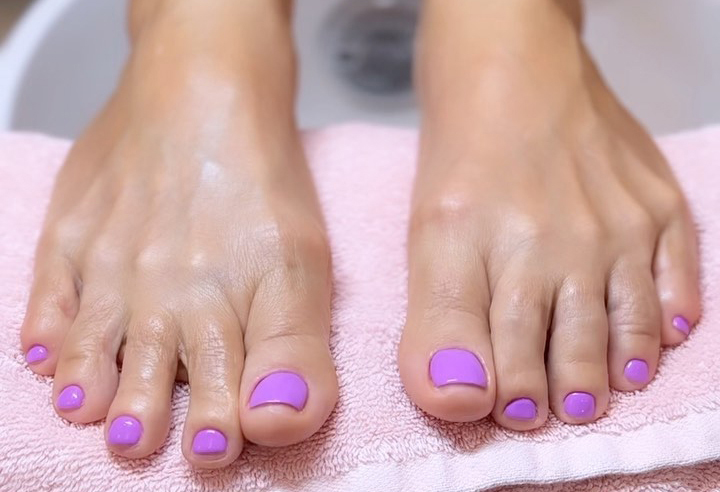
Pedicures. Foot services have a built-in rhythm of scrubbing, massage and a warm towel finish. The spa version of our pedicure is designed for a slower, more indulgent visit, and many people find the massage step the most restful part of any appointment.
A simple No Chip manicure. If you already know your color and you're not adding a design, there's very little to discuss. The service moves through removal, shaping, prep, color and a short hand massage in a predictable order.
What's less quiet: designs. Hand-painted details, French variations, stones and anything that needs decisions about placement mean more back-and-forth. Nothing wrong with that, but if silence is the goal, keep the design simple or save it for a more social day.
A Quick Comparison
Service
Pace
Decisions during the visit
Good for a quiet hour?
Russian manicure with Hard Gel
Slow and precise
Shape and color, usually settled at the start
Yes, once you've decided up front
Japanese manicure
Calm, no polish step
Almost none
Yes, the simplest option
No Chip manicure, solid color
Steady and predictable
Color only
Yes
Pedicure, spa version
Slower, with a massage finish
Polish choice
Yes, often the most restful
Any service with detailed design
Slower, more discussion
Placement, color, details
Less so, better for a social day
If you're on the fence, ask your technician which service they'd choose for a quiet visit. Their answer is usually practical and honest.
Pick the Right Time
When you come in matters as much as what you book.
At many salons, weekday daytime slots are calmer than evenings and weekends. There's less foot traffic, fewer simultaneous appointments and less background noise. That's a general pattern, not a promise about any specific afternoon, so ask when you book: "Which times tend to be quietest?" You'll get a direct answer.
An early slot is often calmer than a mid-afternoon one, simply because the day hasn't had a chance to get busy yet. Booking the first appointment of the day also means nobody has run late ahead of you, which removes one of the biggest sources of rushed energy.
Give yourself extra time. Rushing is its own kind of noise, and a visit squeezed between two commitments never feels restful. If you're coming in with old gel or an overlay, mention it when you book so removal doesn't eat into the part of the visit you wanted to savor.
If you'd like a more private setting altogether, our Wilmette location has private rooms, and we've written about how they work in our guide to private room manicures in Wilmette. The rest of this guide is for any appointment, in any setting.
Three Kinds of Quiet
People ask for silence for different reasons, and the best version of the visit changes with the reason.
The back-to-back week. You've been talking all day, in meetings, on calls, in messages. For you, quiet means not having to produce words. The simplest approach is a service with few decisions: settle your color and shape at the start, then let the hour run. A short sentence at the beginning is all it takes, and you won't need to repeat it.
The one free hour. Parents, caregivers and anyone juggling a lot often get exactly one hour that belongs to them. Here, the goal is to protect it. Book a time when nothing is waiting right after, put your phone away and resist the urge to use the hour for errands in your head. It's tempting to treat a manicure as a to-do item, and it works better as a break.
The overwhelmed-by-salons visit. For some people, the noise, scents and activity of a busy salon is the hardest part. If that's you, book a quieter time of day, mention it up front, and ask about any adjustments that would help, such as music volume or where you're seated. Technicians would much rather make a small change at the start than watch someone struggle through an appointment.
Whichever one is closest to your situation, the same principle holds: say what you need before the service starts, and the rest gets easier.
Managing Sound, Scent and Light
A quiet appointment isn't only about conversation. A few other things shape how restful the hour feels.
The sound of the tool. The e-file makes a steady hum, and some people find it relaxing while others find it grating. If it bothers you, tell your technician. They can't change the tool, but they can often adjust their pace, and knowing helps them keep you comfortable.
Headphones. Plenty of people want to listen to a podcast or music, and it's a perfectly reasonable request. Ask your technician first, because some steps need you to hear a quick instruction, such as "hold still" or "let me know if that's warm." A single earbud, or headphones kept on low, usually works.
Music in the salon. If the background music is a problem, ask politely whether it can be turned down. The answer is often yes, and if it isn't, a pair of headphones solves it.
Scent. Products have smells, and some people are sensitive. If you're bothered by a particular scent, mention it at the start. If you have allergies or sensitive skin, tell us when you book so we can talk it through.
Light and temperature. If the room feels cold or the seat is awkward, say so early. A small adjustment at the start makes the whole hour better, and it's much easier to fix before the service begins than halfway through.
Handling Small Talk With Grace
Even with a clear request, small talk sometimes creeps in. A few ways to handle it without awkwardness:
- Answer briefly and warmly. "Fine, thanks, just tired today." Then let the silence settle. Most technicians take the hint.
- Use a gentle redirect. "I'm going to close my eyes for a bit, if that's okay."
- Give a friendly signal. A smile, a nod, and a long exhale go a long way.
- Thank them. "Thanks for understanding" at the end of the visit reinforces that it went well and makes it easier to repeat.
If you tend to feel guilty about being quiet, it helps to remember that technicians appreciate clear communication. A client who says what they want is easier to take care of than one who suffers politely.
When the Appointment Doesn't Go as Planned
Even with a clear request, a visit sometimes gets busier than you hoped. A group arrives, a phone rings, a conversation starts at the next station. A few quiet ways to deal with it:
- Say something early, not late. If it's bothering you ten minutes in, mention it then. Ten minutes in, a small adjustment is easy. Forty minutes in, there's less room to change anything.
- Ask for a small fix, not a big one. "Could the music come down a little?" is easier to act on than a general complaint.
- Use your tools. A single earbud, closed eyes or a book on your lap is a polite way to create your own space.
- Tell the salon afterward. If the visit wasn't what you wanted, say so kindly when you leave or when you rebook. It helps the team plan better next time, and it makes it easier to ask again.
None of this needs to be a big conversation. A quiet appointment is a small request, and most salons are glad to accommodate it.
What to Do With Your Hands, Your Phone and Your Mind
A restful appointment depends partly on what you do while you're in the chair.
Put your phone away. Silent isn't enough. A phone face-down on the table still invites the occasional glance, and a buzzing one pulls your attention out of the room. Leave it in your bag if you can.
Use the cure time. When gel cures under the lamp, your hand is held still for a short stretch, and there's nothing to do but rest. It's the one part of the appointment where you can't be productive, and that's the point.
Let your hands go soft. Many people hold their hands tensely during a manicure without noticing. Relaxing your fingers and wrist makes the technician's work easier and the service more comfortable.
Don't overthink the finish. If you've already decided on color and shape, there's nothing left to manage. Trust the process and let the hour be an hour.
After the Appointment: Keeping the Calm
The end of a quiet visit is as important as the beginning. Skipping the rush back into noise helps the effect last.
- Leave a few minutes of margin before your next commitment. A quiet hour followed by a frantic dash undoes a lot of the benefit.
- If you chose regular polish, give it time to air-dry before you reach for your phone or your keys.
- Take a short walk or a quiet minute before returning to messages and calls.
- Book the next one before you leave, and mention that you'd like the same kind of visit again.
Ready to Book?
If you'd like a calm hour, you can book at our Lincoln Park or Wilmette location. Mention that you'd like a quiet appointment, and tell us about anything on your nails now. We'll take it from there.
FAQ
Is it rude to ask for a quiet appointment? Not at all. It's a common request, and technicians generally prefer to know what you want. A short, friendly sentence is all it takes.
Which services are best for a quiet visit? Russian manicure and Japanese manicure are both slow and calm by nature, and a simple No Chip manicure with a color you've already chosen involves very little discussion. Pedicures tend to be restful too, particularly the spa version.
Can I wear headphones during my manicure? Often yes, but ask your technician first. Some steps need you to hear a quick instruction, so a single earbud or low volume works best.
What's the best time of day for a calm appointment? Weekday daytime slots are usually quieter than evenings and weekends. Ask which times tend to be quietest when you book, and consider an early slot.
Recommended
Articles

Halloween Nails 2026 in Chicago: Trends, Designs and How to Book Before October 31

No Chip Gel Manicure in Chicago: What's Included, How Long It Lasts and How to Make It Last